Paula is a dedicated and experienced supervisor who relishes the opportunity to guide and mentor doctoral students on their research journey. She has a strong track record of not only successfully supervising students to completion but also ensuring they are well placed to secure the career of their choosing after graduating with their PhD.
Paula welcomes enquires from prospective students ready to embark on a rigorous intellectual journey in areas that align with her areas of expertise.
Current Supervisions
Rebecca Dickson

Rebecca’s research examines the way in which Australia’s construction law – particularly the regulation of Australia’s construction industry and the allocation of risk under construction contracts for Australian infrastructure projects – can be rebuilt to create a sustainable and equitable legal environment. This research builds on developments – such as the use of alliance and relationship contracts, and procurement policy requiring the inclusion of women in Victorian government projects – and proposes further changes that will make Australia’s construction law fit for purpose and able to respond to new and emerging risks, such as climate change, pandemics and the use of artificial intelligence. Rebecca’s research is interdisciplinary; it combines doctrinal research (particularly statutory interpretation) with social and cultural studies (such as responsive regulation theory and law reform research).
Elise Franklin
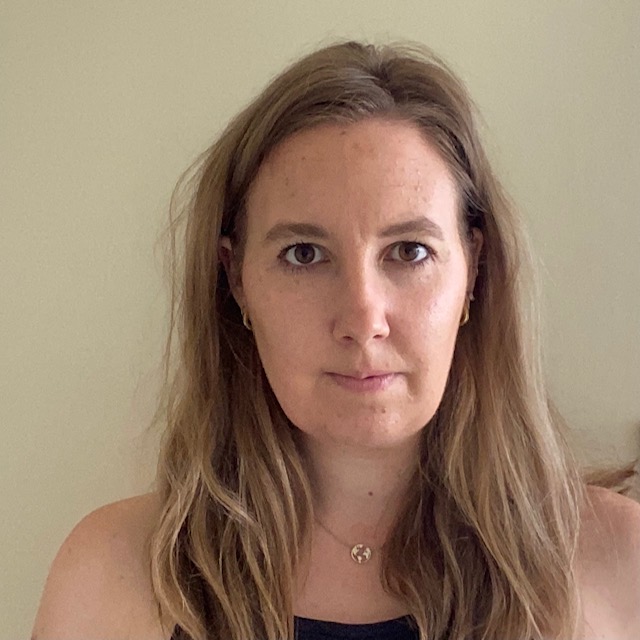
Elise began her PhD in 2021, researching the Refugee Convention ground ‘particular social group’ and its applicability to street children. From a children’s rights perspective, Elise’s thesis seeks to examine the particular vulnerabilities of street children as distinct from those of other impoverished or disadvantaged children, in order to determine whether street children may constitute a particular social group for the purpose of being recognised as refugees. The case law on this issue is contentious and mixed, leading to unpredictable and arguably unjust outcomes. In some courts, claimants identifying as street children have been successful in being granted refugee status; in other cases they have specifically not been recognised as a particular social group. This research focuses primarily on asylum claims in the US from Central American children, but also considers the different approaches taken on similar issues in other jurisdictions.
Completed Supervisions
Alan Davis

Alan’s research considered whether youth justice/group conferencing as the primary expression of restorative justice practiced in Australian jurisdictions is compatible with, and/or reflective of, children’s rights. It sought to balance questions about the efficacy and efficiency of youth conferencing with an evaluation of its compliance with international children’s rights standards. More broadly, Alan’s research considered the utility of using children’s rights as a standard against which to evaluate youth justice systems and individual youth justice programs. His research questions included whether the evolution of ‘more rights’ for children over the past 25 years can be equated to mean ‘better rights’ for children when considered in the context of restorative justice conferencing initiatives? And whether the effectiveness of these restorative processes comes at the expense of children’s rights?
Dr Davis is a senior lecturer at the College of Law where he teaches criminal law.
Farinaz Zamani

Farinaz’s research examined the history of courtship traditions in Iran, with particular attention to the customs of Khastegari within Persian migrant families, in order to determine whether the position of women as right holders is affected by the rules pertaining to such customs. Building on the long-standing troubled relationship between law and culture, Farinaz investigated whether contemporary notions of human rights can protect a woman’s consent to wed based within conventional cultural practices.
Dr Zamani is Senior Adviser in Human Rights at the Victorian Equal Opportunity and Human Rights Commission.
Warisa Ongsupankul

Warisa’s thesis examined how to best protect the right to non-discrimination on the basis of sexual orientation, gender identity and intersex status (SOGII). She explored various themes such as the relevance of the Sustainable Development Goals to SOGII, the potential conflict between a child’s access to comprehensive sexuality education (CSE) and parental authority and the interrelationship between law and new gender politics. Warisa examined these issues through the lens of International human rights law as well as regional and national laws. Her research was underpinned by a variety of theoretical stances, including, postmodern feminist, queer legal theories and critical legal theory.
Dr Ongsupankul is a Lecturer of Law at Thammasat University in Thailand.
Mhamed Biygautane
Mhamed commenced his doctoral studies in early February 2015. His thesis examined the use of Public-Private Partnerships (PPPs) to deliver infrastructure services in the Gulf Cooperation Council (GCC) states. He undertook empirical research to examine the processes that the governments of Saudi Arabia, Kuwait and the UAE have used to introduce and implement PPPs on infrastructure projects. His research considered how the various actors (decision-makers, consultants and other agents) have applied their knowledge and experience of PPPs in other countries to the domestic contexts of Saudi Arabia, Kuwait and the UAE.
Dr Biygautane is a Senior Lecturer in Public Management in the School of Social and Political Sciences at the University of Melbourne.
Geeta Shyam

Geeta’s research examined the legal classification of animals as property in Australia, and investigated whether this status is consistent with modern community attitudes. She surveyed almost 300 respondents in Melbourne and regional Victoria and found a lack of awareness about the property status of animals and its implications. Her empirical research further found that attitudes towards animals were variegated, and that there was wide disagreement with the property status of at least some animals.
Dr Shyam is a writer and continues to collaborate with Professor Gerber at Monash University.
Aaron Timoshanko
Aaron’s PhD thesis was in the field of animal law. In particular, it examined the regulations affecting the treatment and protection of jumps horses and whether they lack democratic or judicial accountability. It explored how the existing regulatory regime can be made more accountable, enabling the public to have a greater influence on the use of horses in society. Aaron’s PhD thesis was awarded the 2018 Mollie Holman Medal for the best thesis for the Faculty of Law.
Dr Timoshanko is a senior lecturer in the School of Law and Justice at the University of Southern Queensland. His research and teaching focus on corporate law, accountability and regulatory theory.
Dr Noel Villaroman

Noel’s thesis analysed the limits of local planning processes in Australia when they already burden the ability of religious groups to fully exercise their right to manifest their religion or belief as a result of spatial constraints – that is, their inability to appropriate sufficient physical space for their worship and other needs. In his thesis, the analysis centred on the structural constraints to religious freedom occasioned by the exercise of a regulatory power by a secular authority. The inquiry focussed on how local planning processes impede the enabling role played by tangible space – epitomised by places of worship – in the enjoyment of intangible faith or belief.
Dr Villaroman is a senior human rights officer in the United Nations working on rule of law issues. This work has seen him posted to Iraq, Sudan, South Sudan, Yemen and Afghanistan.
Olivia Ball

Olivia graduated with her PhD in 2014. Her thesis was entitled All the Way to the UN: Is Petitioning a UN Human Rights Treaty Committee Worthwhile? As part of her doctoral research, Olivia located and interviewed most of the authors of the first 33 successful cases brought against Australia alleging breaches of international human rights law (1994—2013). Olivia identified the value of procedural remedies to victims, as well as the challenges in securing effective substantive remedies.
Dr Ball is a Melbourne City Councillor where she continues to advocate for human rights. She is also the founder director of Remedy Australia, an NGO that monitors Australia’s compliance with decisions of the UN human rights committee.

 Professor Paula Gerber